From Proposal to Decision: Efficient Workflow Management for Alliances
International alliances thrive on structured innovation—member organizations propose standards, share research, contribute to guidelines, and collectively advance their industries. But effective proposal management at scale presents unique challenges. How do alliances ensure diverse proposals are processed systematically, fairly, and efficientl
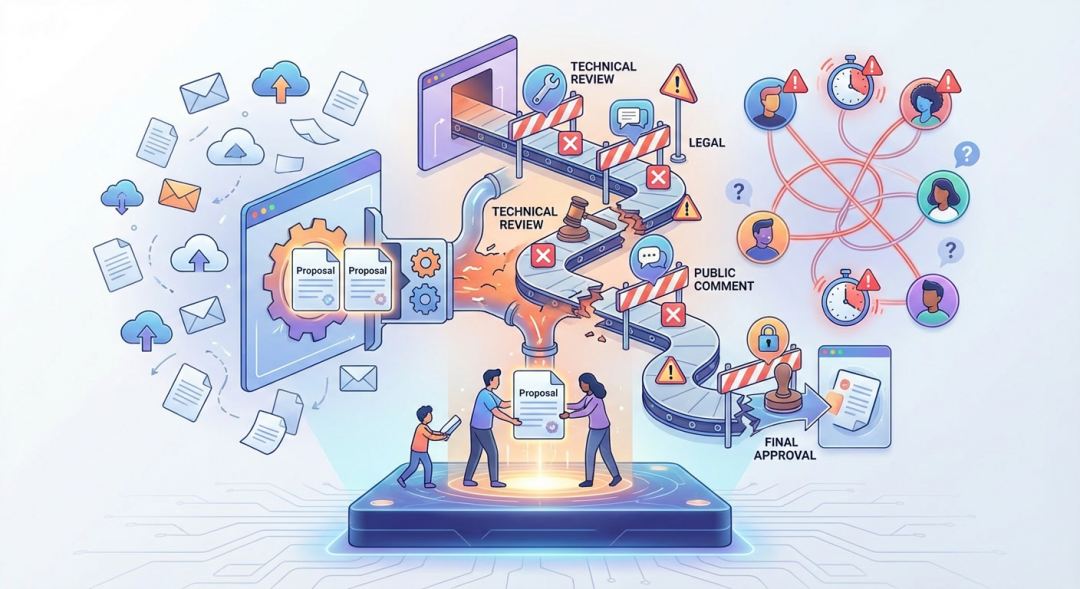
Let’s say there is an international technology alliance with member organizations ranging from startups to multinational corporations. When a member organization needs to propose a new technical standard, they face several workflow challenges:
- Process misalignment: Different member organizations have different internal approval processes, creating friction
- Multi-stage complexity: Alliance proposals often require multiple review phases—technical review, legal assessment, public comment, final approval
- Cross-organizational input: Valuable input comes from experts across different member organizations, not just the submitting entity
- Scattered documentation: Proposal materials, reviews, and decisions end up in emails, shared drives, and meeting notes
- Duplicate submissions: Similar proposals are submitted by different organizations unknowingly, wasting reviewer time
- Coordination overhead: Tracking which proposals are at which stage, who needs to act next, and ensuring deadlines are met
The Challenge: Scaling Proposal Governance
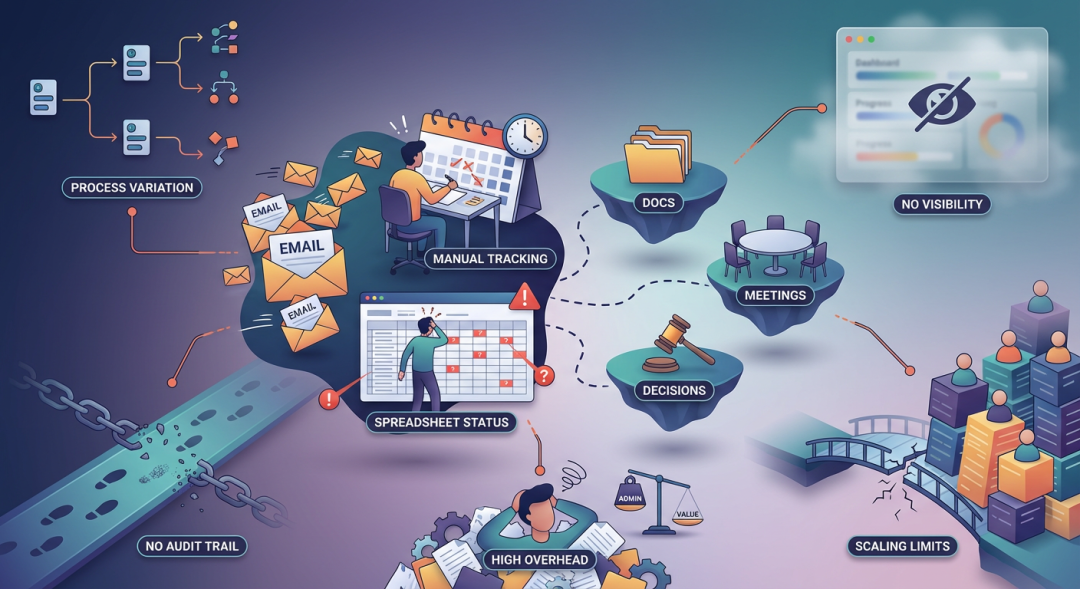
Traditional proposal management for international alliances often relies on:
- Email-based submission and review processes
- Manual tracking of proposal stages and deadlines
- Separate systems for documentation, meetings, and decision-making
- Spreadsheet-based status tracking
- Ad hoc cross-organizational coordination
These approaches struggle with:
- Ensuring consistent process application across all proposals
- Maintaining visibility into proposal status for all stakeholders
- Providing audit trails for governance and compliance
- Scaling as alliance membership and proposal volume grow
- Reducing administrative overhead while maintaining thoroughness
Solution: AllianceHub’s Integrated Proposal Management
AllianceHub addresses these challenges by providing a comprehensive proposal management framework that integrates with the broader collaboration ecosystem.
1. Custom Proposal Stages: Process Alignment
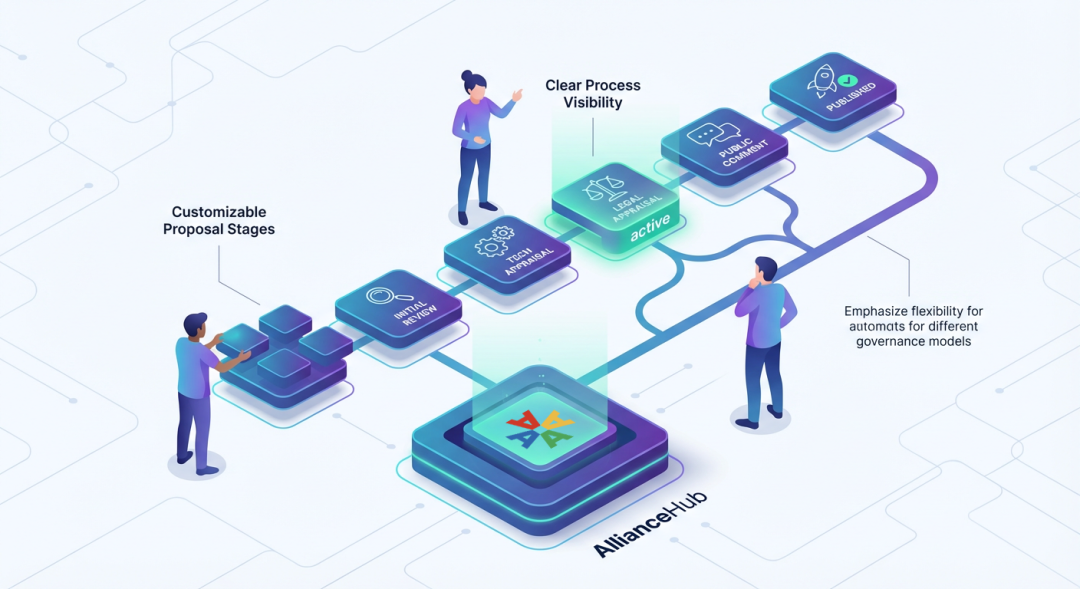
Every alliance has unique governance requirements. AllianceHub supports customizable proposal stages:
- Define your process: Organizations can configure proposal stages according to their governance model—for example, “Preliminary Review - Technical Evaluation - Legal Assessment - Public Comment - Publication”
- Stage transitions: System tracks automatic or manual stage transitions based on configured workflows
- Clear process visibility: All stakeholders see where proposals are in the workflow and what comes next
This flexibility allows international alliances to configure AllianceHub to match their established governance procedures rather than forcing workflows to fit the platform. Startup-heavy alliances can implement lightweight review processes, while standards-focused alliances can configure comprehensive multi-stage workflows.
2. Cross-Organizational Collaboration: Expertise Input
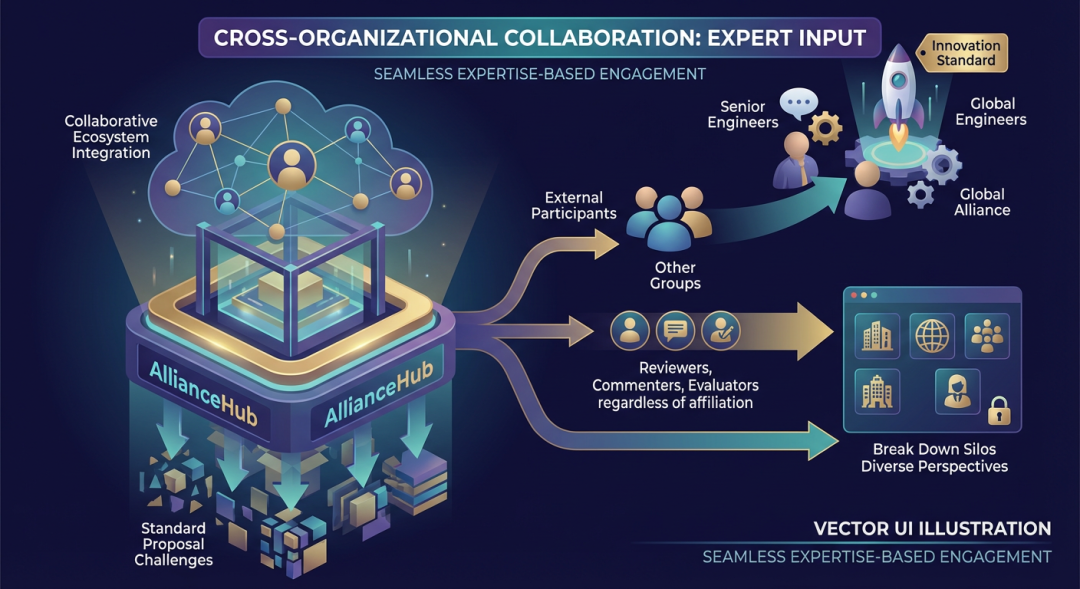
Valuable proposal input comes from across the alliance. AllianceHub enables flexible collaboration models:
- Invite external participants: Proposal administrators can invite members from other groups or even external individuals to participate in proposal work
- Multi-role participation: Experts can participate in review, commentary, or evaluation regardless of their group affiliation
- Breaking organizational silos: A security review panel can include experts from multiple member organizations, bringing diverse perspectives without requiring reorganization
For international alliances, this is critical. When a startup proposes an innovative standard, alliance wants the largest member organizations’ senior engineers to weigh in—regardless of formal committee assignments. AllianceHub makes this expertise-based participation seamless.
3. Custom Proposal Numbering: Document Standardization
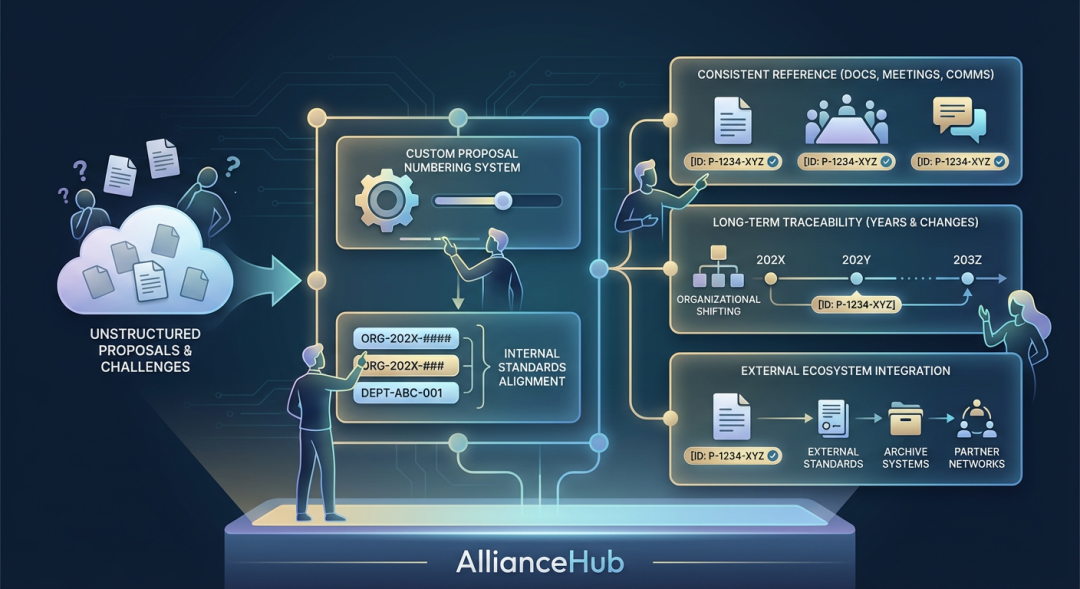
International alliances produce high volumes of proposals that require clear, traceable identification:
- Match internal specifications: Organizations can customize proposal numbering formats to align with their documentation standards
- Consistent referencing: Standard numbering ensures proposals can be referenced clearly across documents, meetings, and communications
- Long-term traceability: Proposal numbers provide persistent identifiers that work across years and organizational changes
This integration between AllianceHub and alliance documentation systems ensures that proposals created in the platform can be referenced in external standards documents, meeting minutes, and member communications without ambiguity.
4. Dynamic Responsibility Assignment: Workflow Flexibility
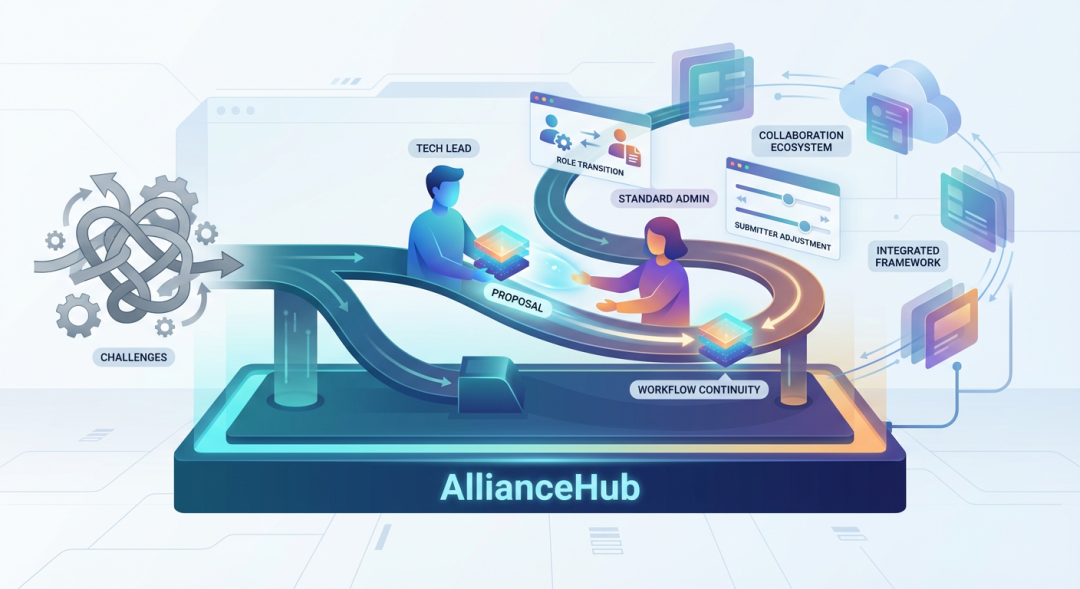
Proposal workflows are dynamic—ownership may shift, roles may change, and personnel may transition. AllianceHub provides flexible responsibility management:
- Submitter adjustment: Proposal administrators can modify the submitter during collaboration processes, accommodating internal role changes and task handovers
- Role transitions: As proposals progress, different administrators may take ownership for different stages
- Workflow continuity: Changes in personnel don’t interrupt proposal progress or documentation integrity
This flexibility prevents workflow disruptions when team members change roles or leave organizations. A technical lead who initiates a proposal can hand off to a standards administrator for the final review phase without starting a new proposal or copying content.
5. Similar Topic Detection: Reducing Redundancy
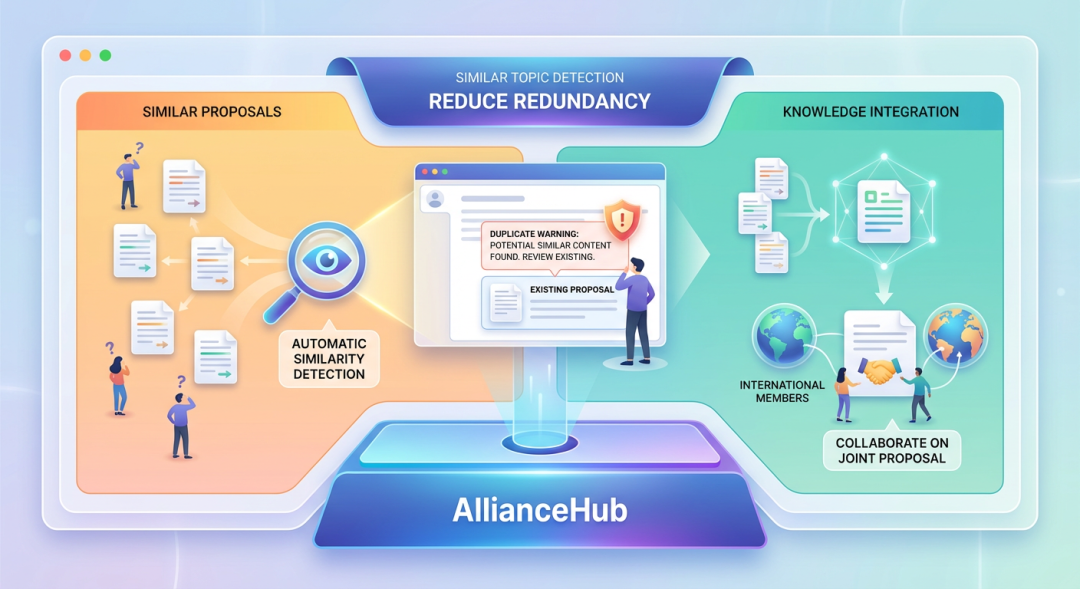
In active alliances, similar proposals are often submitted by different organizations without awareness—wasting reviewer time and creating confusion. AllianceHub addresses this:
- Automatic similarity detection: When users submit proposals or topics, the system performs similarity comparison against existing proposals
- Duplicate alerts: Users are warned of potentially similar content before completion, allowing them to review existing proposals
- Knowledge consolidation: This reduces redundant submissions and encourages collaboration on similar initiatives
For international member organizations, this prevents the situation where three separate organizations independently propose nearly identical standards—instead, they’re prompted to collaborate on a joint proposal from the start.
6. Integrated Documentation: Single Source of Truth
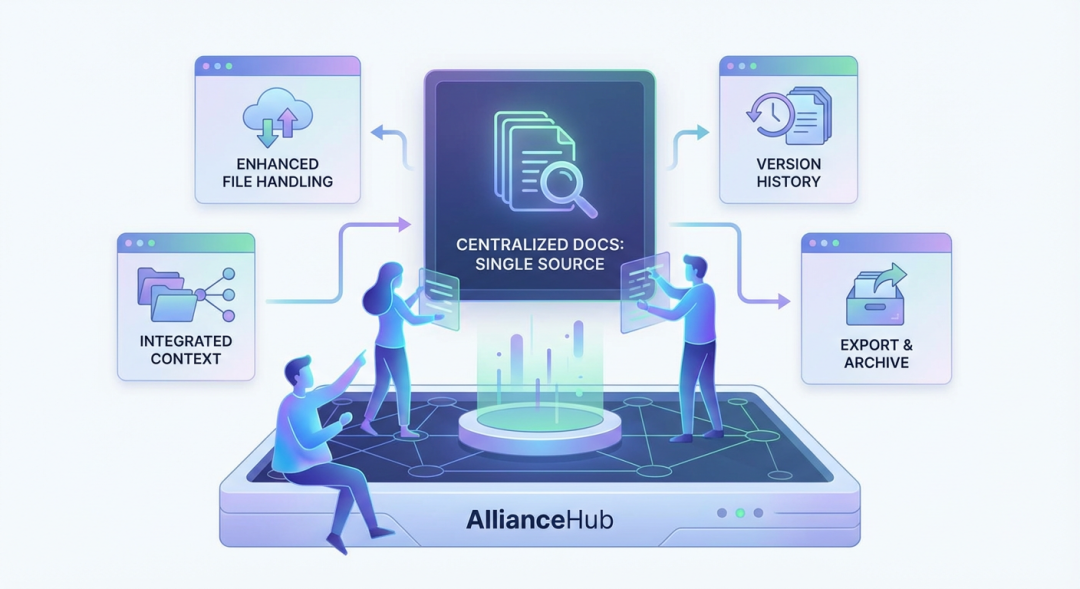
Proposals generate substantial documentation—technical specifications, research papers, meeting materials, review feedback. AllianceHub provides:
- Enhanced large file handling: Comprehensive upgrade to large file upload and download capabilities across proposal modules
- Centralized materials: All proposal-related documents are stored within the proposal context, not scattered across systems
- Version control: Updated materials replace previous versions in the same location, maintaining clear version history
- Collection export: Users can export collection details for archiving and review, enabling offline analysis and external documentation
This integration ensures that proposal reviewers always access the current, correct versions of materials, and that proposal packages can be exported for external standards documentation or compliance requirements.
7. Mobile Proposal Management: Work From Anywhere
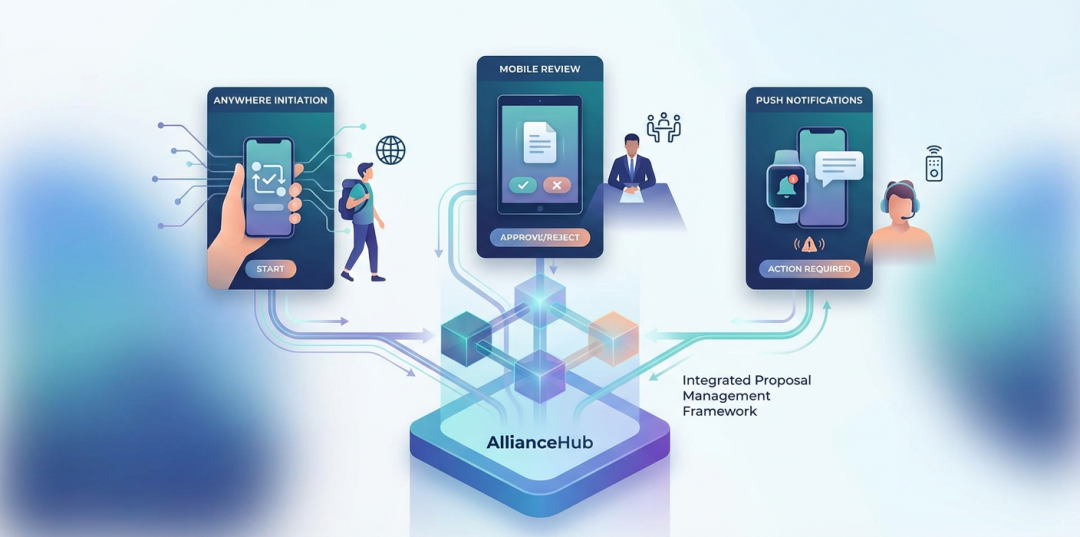
Alliance professionals work globally—traveling, attending conferences, working across time zones. AllianceHub’s mobile support means:
- Initiate proposals anytime: Users can start proposal workflows from mobile devices without waiting for desktop access
- Review on the go: Proposal administrators can review submissions and advance workflows from mobile devices
- Push notifications for proposals: Get timely alerts when proposals advance to stages requiring action
This mobile-first approach ensures proposal workflows don’t stall when key personnel are traveling or working remotely. A proposal requiring urgent approval can advance even when the approving official is between conferences.
8. Meeting Integration: Discussion to Decision
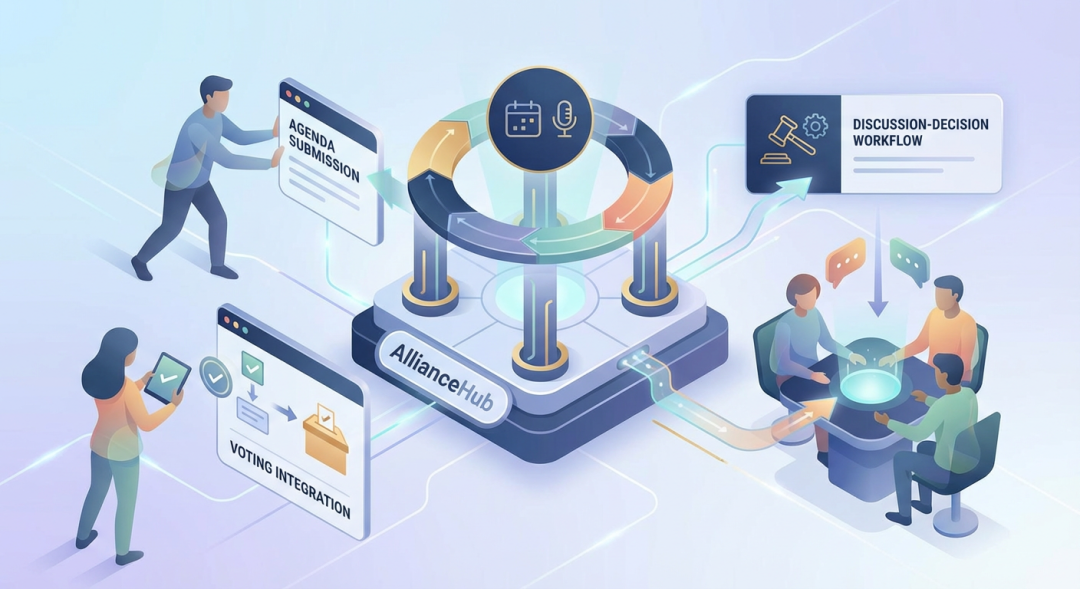
Proposals don’t exist in isolation—they’re discussed, refined, and decided in meetings. AllianceHub integrates these workflows:
- Meeting topic submission: Participants can submit proposal topics online to meeting agendas, ensuring structured discussion
- Ballot integration: Proposal outcomes can flow directly to formal voting within meetings
- Discussion-to-decision workflow: Teams move seamlessly from proposal discussion to formal decision-making
This integration transforms proposals from static documents into living governance artifacts—discussed, refined, and formally decided through the alliance’s standard collaboration processes.
9. Security Assurance: Controlled Collaboration
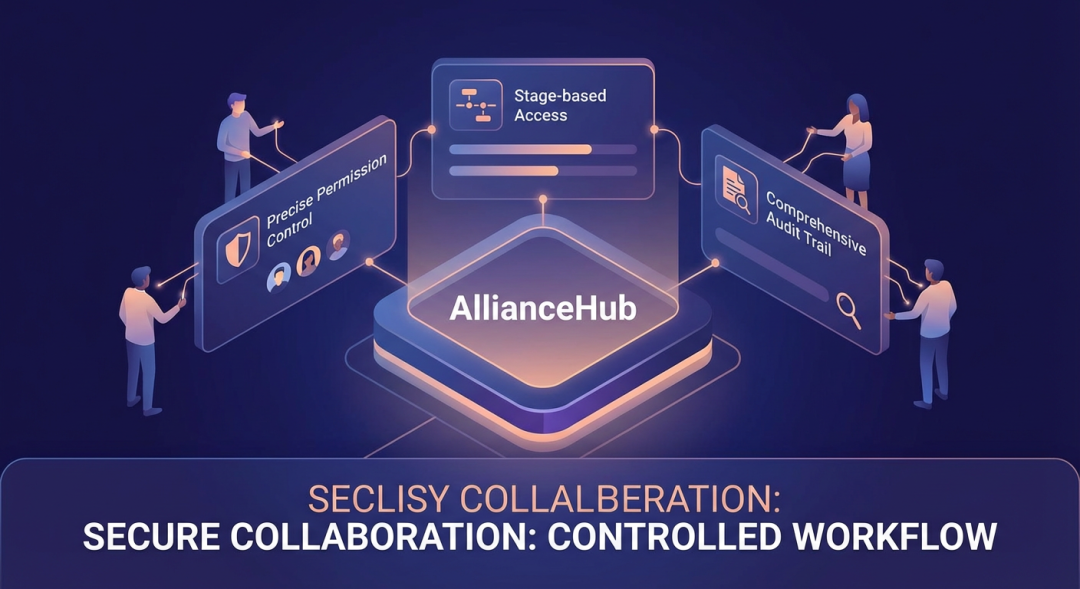
Proposals often contain sensitive technical details, pre-release standards, and strategic information. AllianceHub maintains security through:
- Precise permission controls: All proposal participants have clearly defined access levels
- Stage-based access: Different stakeholders have appropriate access at different workflow stages
- Comprehensive audit logging: All proposal actions are recorded for governance and compliance requirements
Security doesn’t come at the expense of collaboration—AllianceHub enables flexible participation while ensuring sensitive information remains protected according to alliance governance requirements.
Traditional vs. AllianceHub: The Impact
| Aspect | Traditional Proposal Management | With AllianceHub |
|---|---|---|
| Process configuration | Hard-coded or manual tracking | Customizable stages, aligned to governance |
| Cross-organization input | Requires separate coordination | Invite external participants directly |
| Proposal numbering | Inconsistent across systems | Custom formats, standardized documentation |
| Document management | Scattered across tools | Centralized with large file support |
| Responsibility changes | Disruptive rework | Dynamic submitter adjustment |
| Duplicate submissions | Uncoordinated wasting | Automatic similarity detection |
| Meeting integration | Separate systems | Connected to agendas and voting |
| Mobile access | Desktop-dependent | Full workflow from mobile |
Key Benefits for International Alliances
1. Governance Alignment
- Configure proposal stages to match alliance governance models
- Consistent process application across all member organizations
- Clear audit trails for compliance and governance requirements
2. Expertise Mobilization
- Cross-organization participation without structural constraints
- Invite the right experts regardless of formal affiliations
- Diverse input improves proposal quality and alliance credibility
3. Workflow Efficiency
- Reduce administrative overhead through automation
- Similar topic detection prevents redundant work
- Mobile access keeps workflows moving regardless of location
4. Integrated Ecosystem
- Proposals connect to meetings, voting, documentation
- Single source of truth for all proposal materials
- Seamless progression from discussion to formal decision
Transforming Proposal into Progress
International alliances succeed when member organizations can efficiently contribute to collective progress. Proposals are the mechanism for this contribution—but proposal management that’s cumbersome, inconsistent, or disconnected undermines alliance effectiveness.
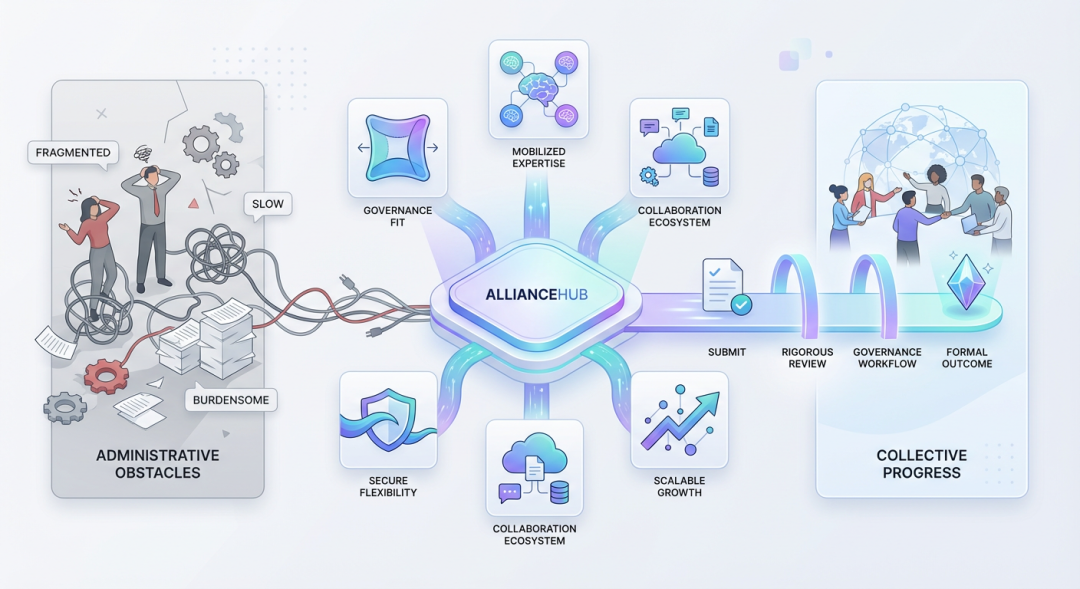
AllianceHub transforms proposal workflows from logistically complex administrative tasks into streamlined, integrated processes that:
- Match alliance governance models rather than forcing them to fit
- Mobilize expertise across member organizations without restructuring
- Connect proposals to the full collaboration ecosystem
- Maintain security and compliance while enabling flexibility
- Scale effectively as alliance membership and proposal volume grow
The result is international alliances where member organizations can propose standards and initiatives efficiently, receive thorough review from across the alliance, and see proposals progress through governance workflows to formal outcomes—all while reducing administrative burden and maintaining the rigor that alliance members expect.
Proposals become pathways to collective progress rather than administrative hurdles.